
🔬 Key Clinical & Consumer Takeaways
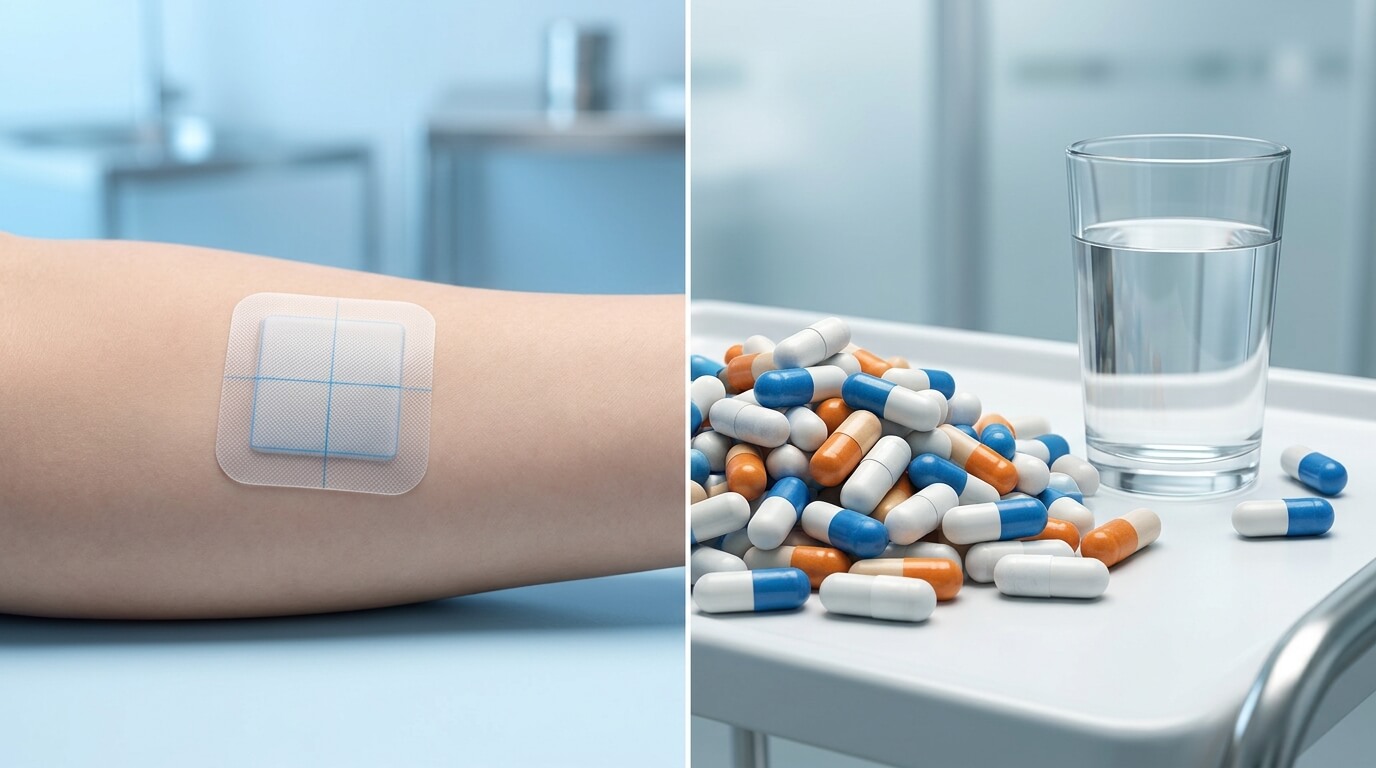
- P-Protect Patch™ requires zero pill swallowing—making it ideal for men over 50 who experience dysphagia (difficulty swallowing large tablets) or acid reflux.
- Unlike bedtime prostate pills that require drinking 6–8 oz of water before sleep (increasing nighttime urine volume), a transdermal patch works silently without fluid intake.
- Lipophilic plant sterols and fatty acids naturally permeate the lipid bilayers of the outer skin barrier over a 24-to-72 hour wear cycle.
1. Why Swallowing Bedtime Prostate Pills Backfires on Nighttime Urination
Think about the irony of traditional oral prostate supplements: the label tells you to swallow two large capsules with a full glass of water at dinner or bedtime to help stop nighttime urination. Yet drinking 8 ounces of water in the evening directly increases renal urine output between 1:00 AM and 4:00 AM!
P-Protect Patch™ solves this paradox completely. Because it is a topical transdermal adhesive patch, it delivers steady botanical support while you sleep with zero evening liquid intake.
2. Bypassing Gastric Acid & First-Pass Hepatic Degradation
When you swallow an oral saw palmetto or pygeum capsule, the gelatin shell dissolves in hydrochloric stomach acid (pH 1.5–2.5). Delicate plant sterols, ferulic acid esters, and carotenoids are exposed to digestive enzymes and then routed via the portal vein straight to the liver (first-pass metabolism), where a large percentage is conjugated and excreted before ever reaching systemic or pelvic micro-capillaries.
By contrast, when you apply a P-Protect Transdermal Patch to clean, dry skin on your lower abdomen or hip, lipophilic bioactives diffuse across the stratum corneum directly into the underlying dermal capillary bed.
3. Steady Time-Released Diffusion vs. Oral "Peak-and-Crash"
Oral tablets create a brief spike in bloodstream concentration 90 minutes after swallowing, followed by a steep drop-off a few hours later. A transdermal patch acts as a continuous, slow-release reservoir over its wear window—supporting calm bladder signaling both during your workday and at 3:30 AM.
Frequently Asked Questions on This Topic
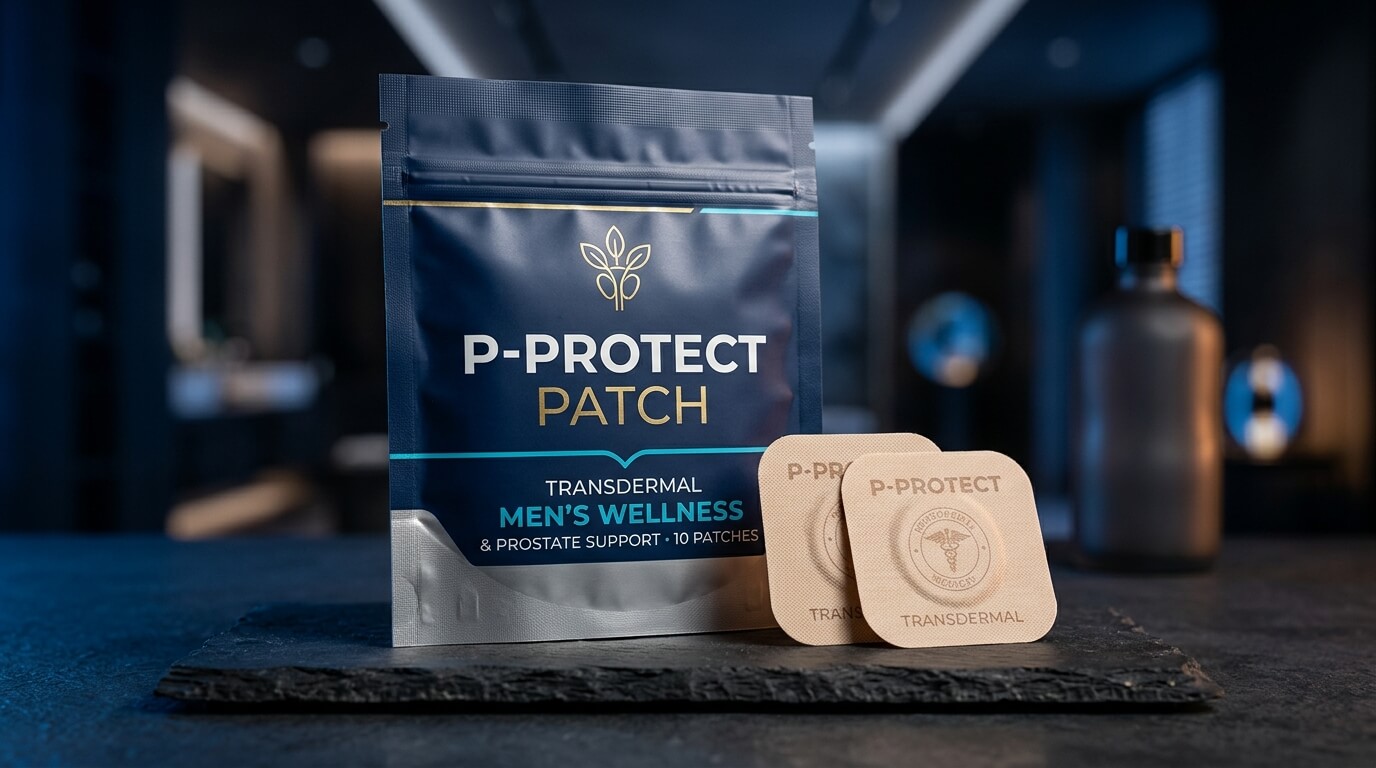
Ready to Try P-Protect Patch™ Risk-Free?
Save up to 70% ($49/Pack on the 6-Pack) with Free Express Shipping, 2 Free Bonuses, and our 60-Day Money-Back Guarantee.